

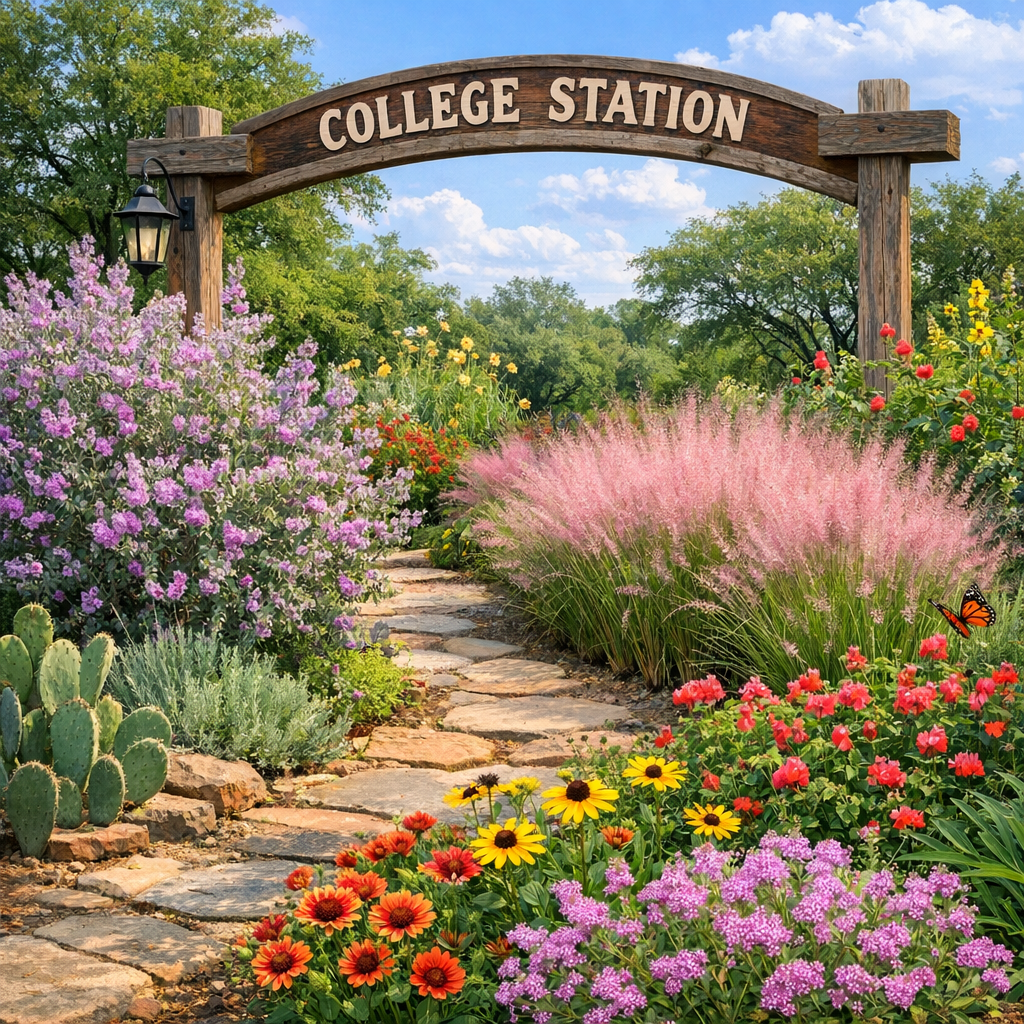
As College Station residents, we are no strangers to the challenges posed by our humid subtropical climate. With average annual temperatures ranging from 57.7°F to 79.2°F and annual precipitation averaging 42.7 inches, our environment demands thoughtful landscaping choices. Incorporating native plants into our gardens not only enhances aesthetic appeal but also promotes sustainability and resilience.
Why Choose Native Plants?
Native plants are species that have evolved in a specific region over thousands of years, adapting to local climate, soil, and wildlife. In College Station, utilizing native flora offers several benefits:
- Drought Tolerance: Many native plants are well-adapted to periods of low rainfall, reducing the need for supplemental watering.
- Low Maintenance: Once established, native species typically require less care than non-native counterparts.
- Support for Local Wildlife: Native plants provide essential habitats and food sources for local pollinators and other wildlife.
Top Native Plants for College Station Landscapes
Here are some native plants well-suited for our region:
1. Texas Sage (Leucophyllum frutescens)
Also known as Cenizo, this shrub features silvery foliage and vibrant purple blooms after rainfall. It’s extremely drought-tolerant and thrives in full sun.
2. Gulf Coast Muhly Grass (Muhlenbergia capillaris)
This ornamental grass produces striking pink plumes in the fall and adapts well to dry, well-drained sites once established.
3. Lantana (Lantana camara)
Known for its clusters of brightly colored flowers, Lantana attracts butterflies and is heat-tolerant, making it a vibrant addition to any garden.
4. Autumn Sage (Salvia greggii)
This perennial offers red, pink, or white flowers and thrives in full sun with low water requirements.
5. Frogfruit (Phyla nodiflora)
A low-growing ground cover, Frogfruit produces tiny white-pink flowers from spring through fall and tolerates foot traffic, making it an excellent lawn alternative.
Planning Your Native Landscape
When designing a native plant landscape, consider the following steps:
- Assess Your Site: Evaluate sunlight exposure, soil type, and drainage to select appropriate plants.
- Choose Diverse Species: Incorporate a variety of plants to create a resilient and visually appealing garden.
- Implement Water-Wise Practices: Utilize mulch to retain soil moisture and consider drip irrigation for efficient watering.
For personalized plant recommendations, the Earth-Kind® Plant Selector by Texas A&M AgriLife Extension Service is a valuable resource. This tool allows you to find plants well-suited for specific regions of Texas based on various characteristics.
By embracing native plants, we can create landscapes that are not only beautiful but also sustainable and harmonious with our local environment.