

By Ava Patel
College Station feels rooted in tradition—Aggie football, campus routines, community core—but beneath that fabric, technology is weaving its way into many corners of daily life. From what we buy to how we learn, smart tools and artificial intelligence are quietly reshaping familiar rhythms.
AI in Health Care: Local Hospitals and Clinics
At Texas A&M and around town, health care providers are using AI to assist in diagnostics, medical documentation, and patient care. AI tools help flag potential health issues via imaging, automate routine paperwork so doctors can spend more time with patients, and even aid in predicting disease outbreaks based on data trends. Researchers are also working on strengthening trust—making sure patients understand how AI is used and kept secure.
Smart Gadgets: Expectation Meets Reality
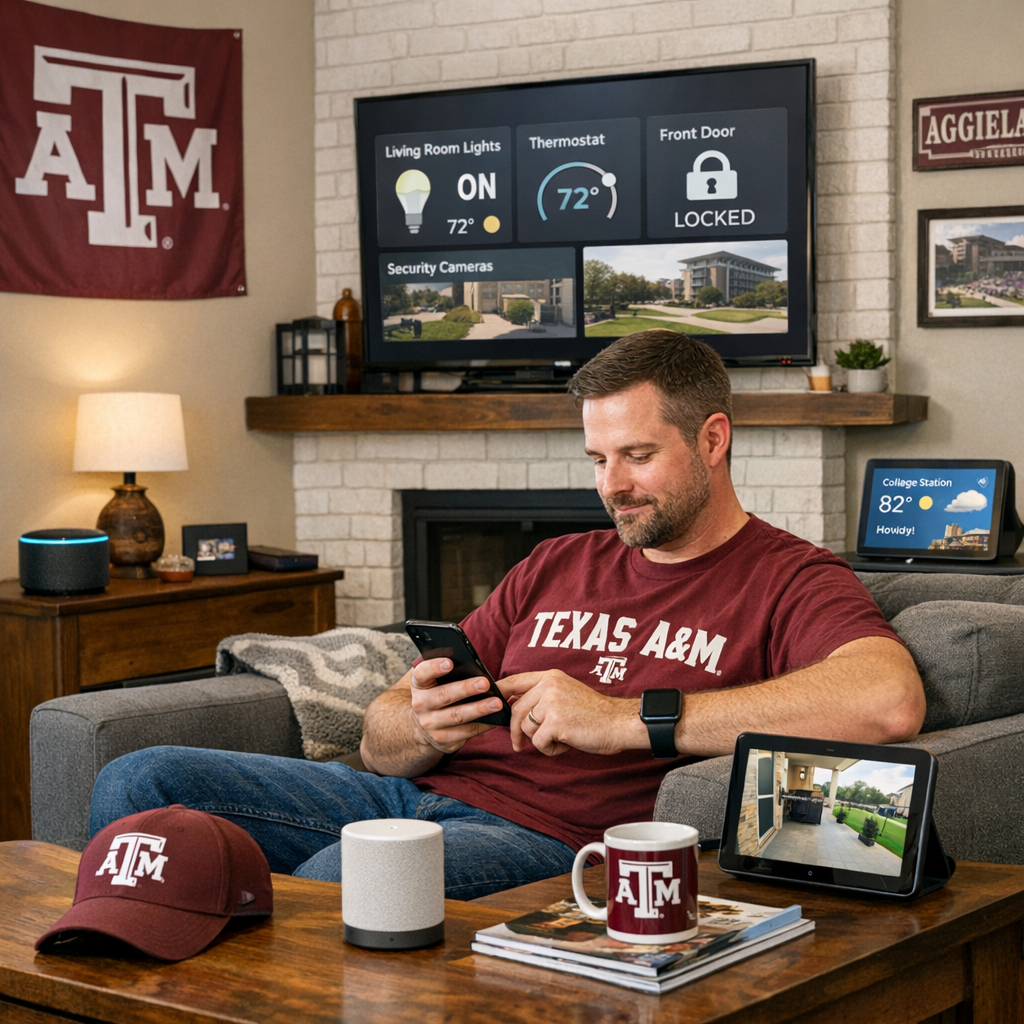
Gadgets once considered luxuries—smart watches, AI-powered assistants, home devices that learn your habits—are now part of many homes and dorms. In the College Station Best Buy, items like wearable fitness devices or advanced camera gear are among top sellers. Even local AT&T stores are prepared for release of new models like iPhones and smart devices, showing growing demand for connected tech. Meanwhile, Walmart’s electronics section features Wi-Fi extenders, smart-home hubs, and accessories people use to boost connectivity at home. These aren’t always flashy—they’re making internet smoother, devices safer, and life more convenient.
Startup Momentum and AI Innovation at RELLIS and Beyond
Part of what makes College Station different is its startup environment—closely tied to Texas A&M’s research arms and infrastructure like the RELLIS Campus. Local innovators and small AI-focused companies are exploring projects in industrial automation, defense, sustainable computing, and optical processing. They benefit from community support, collaboration with university labs, and a lower cost of entry compared to big-city ecosystems.
Work, Education, and the Changing Expectations
AI isn’t just changing tools—it’s shifting what employers expect and what learning looks like. Some jobs are evolving or shrinking if many tasks can now be automated, which means skills like critical thinking, creativity, and data literacy are more valuable. On campus, there’s growing interest in coursework that helps students understand and apply AI—ethics, bias, responsible use—as well as programs that let students build tools, not just use them.
Everyday Impacts and What to Watch
For most CStat residents, AI shows up in small ways: voice-controlled lights, smart thermostats, personalized playlists, or apps that help with finances and to-do lists. On the horizon are more responsive public services (think chatbots at city hall), energy management tools for homes, and smarter infrastructure. But with opportunity come concerns—data privacy, ensuring access for everyone, making sure we keep human connection even as machines help more.
As CStat grows, tech will continue shaping how we live—what we expect of our work, health, homes, and learning. The choices we as a community make—around transparency, fairness, and access—will matter just as much as the inventions themselves.