

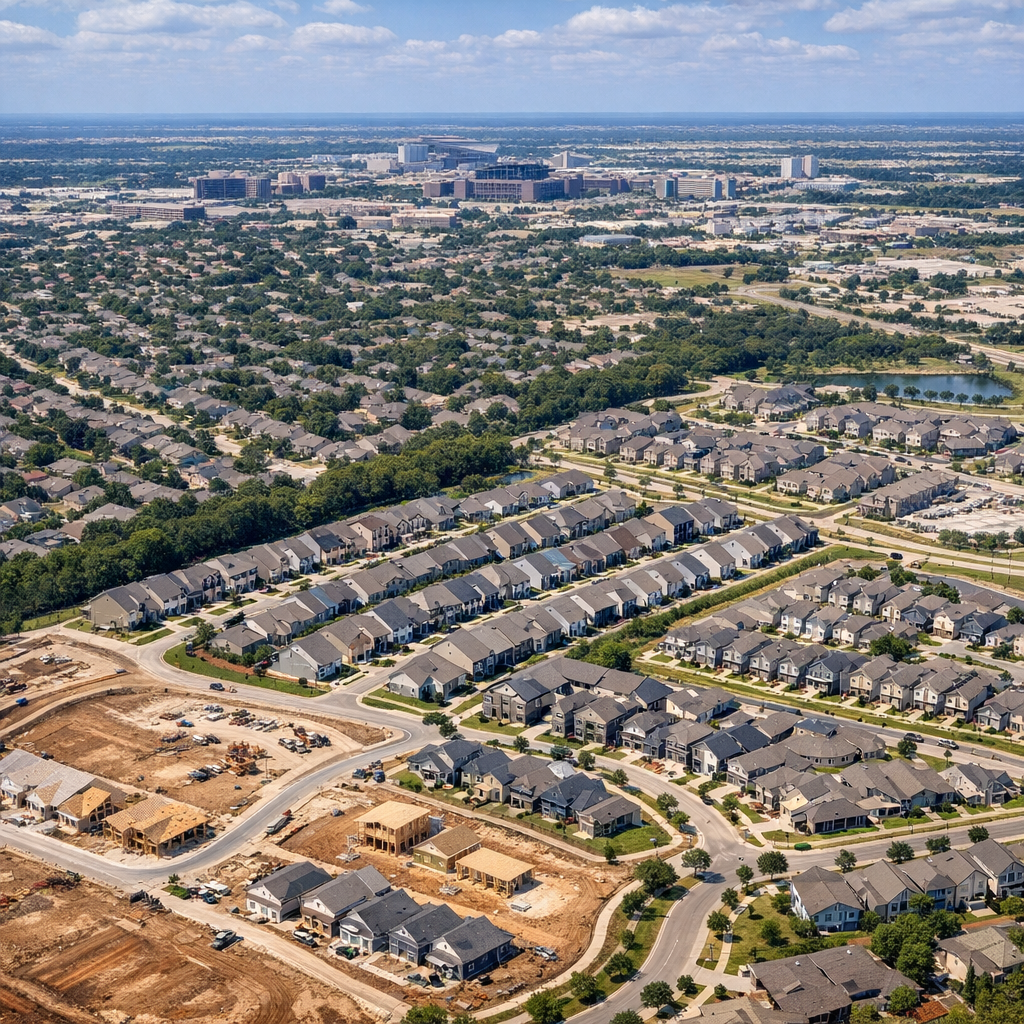
College Station, Texas, continues to experience significant shifts in its real estate market, influenced by factors such as population growth, economic development, and the presence of Texas A&M University. This article provides an overview of current housing market trends, rental dynamics, and new developments shaping the local landscape.
Housing Market Trends
As of early 2026, the median home sale price in College Station stands at approximately $335,000, reflecting a 2.5% increase compared to the previous year. Homes are selling after an average of 82 days on the market, indicating a somewhat competitive environment. In Central College Station, the median sale price is around $255,000, marking a 7.3% decrease from the prior year, with homes selling faster, averaging 32 days on the market. These trends suggest varying dynamics within different neighborhoods, with some areas experiencing price appreciation and others seeing declines. [Source: Redfin]
Rental Market Dynamics
The rental market in College Station remains robust, with the median rent at $2,000 per month, representing a 5.26% increase year-over-year. This upward trend underscores sustained demand for rental properties, likely driven by the student population and workforce residents. The city has approximately 977 rental properties available, providing a range of options for prospective tenants. [Source: Realtor.com]
New Developments and Affordable Housing Initiatives
Several new developments are underway to accommodate the growing demand for housing. Notably, the ‘Hub on Campus’ is a proposed $130 million residential project near Texas A&M University, featuring over 400 student housing units and a 10-story parking garage. Construction is expected to begin in May 2026, with completion anticipated by June 2028. [Source: College Station Today]
In response to the need for affordable housing, a $21 million apartment complex is proposed to offer 60 units targeting workforce residents earning between 30% and 60% of the area’s median income. This initiative aims to address the housing affordability crisis affecting many residents. [Source: KBTX]
Additionally, the city supports non-profit affordable housing development through partnerships with organizations like Habitat for Humanity, providing new construction opportunities for income-qualified residents. [Source: City of College Station]
Conclusion
College Station’s real estate market is characterized by a mix of rising home prices, a strong rental market, and proactive development projects aimed at meeting the diverse needs of its residents. Prospective buyers, renters, and investors should stay informed about these trends to make well-informed decisions in this evolving landscape.